Radiohead – ‘A Moon Shaped Pool’ a review.


So Radiohead, kings of the ‘we’ll do it our way’ album release technique dropped their new album at 7pm BST on Sunday 8th May (ignoring the Google Play slip up earlier in the day) after a week that saw them make tracks one and two available with great video’s but little fuss and also saw them basically wipe themselves from the internet before doing so. At first glance I was a little uncertain of the albums running order as the songs were listed in alphabetical order, but it seems this is the running order and quite possibly some matter of fact statement from the band. A long time visual collaborator of the band, Stanley Donwood, has already described the album as ‘a work of art’ before it was even finished. As I sit here typing, producer Nigel Godrich has already gone online stating the making of the album was a very intense experience for him personally. But who cares about the hype, what about the music?


‘Burn The Witch’ debuted a week ago with a wonderful ‘Trumpton/Camberwick Green’ type video. Musically it’s very inviting, a string riff underpinning a song of subtle paranoia that general consensus seems to pin as being a comment on hysteria about mass immigration that has grown since 9/11 (‘This is a low flying panic attack, red crosses on wooden doors, we know where you live). The song builds to a mildly frenzied string driven climax then gives way to the much calmer sounds of ‘Daydreaming’. It’s soft, gentle and trance like, though the (at times heavily treated) vocal could reference relationship woes or the plain numbness of day to day life. The song finishes with a repeated phrase ‘Efil ym fo flah’ (Half of my life) which presses home the air of regret. This is a haunting piece with some strange noises and effects. I love it.


And then onto the stuff that we’ve not heard. ‘Decks Dark’ is another soft song, but Thom’s vocals are truly alive on this album in a way that recent Radiohead albums has been crying out for. Spacecraft’s, lies, and a darkness are referenced, I almost hear this song as a eulogy to David Bowie but that’s probably just me hearing that.  ‘Desert Island Disk’ slides in on a beat and a calming folk-like acoustic guitar refrain. The song seems to tell a tale of passing over to the afterlife, though the afterlife appears to be the aftermath of a relationship and that ‘Different types of love are possible’. Thom York has experienced the end of a long relationship/marriage and this seems to inform this song and maybe this is what gives the vocals an emotional connect that Radiohead songs have not always carried. ‘Ful Stop’ builds over syncopated beats and synth swirls with a driving bass and weaves a story of two friends or partners who have let each other down. The song shifts moods musically whilst always carrying the propelling beat in the same direction. The album is emerging as immaculately crafted and perceived despite its stop-start gestation.


‘Glass Eyes’ is one of the albums more obviously relationship based songs. ‘Hey it’s me, I just got off the train….And I’m wondering, should I turn around?’. Radiohead do often get accused of being ‘miserable’ by non-fans, and it is kind of undeniable, especially at times like this. But there is a beauty in this music too. This song as with most others here has the Radiohead signatures of treated electronics but there’s lush orchestration all over this album and some full on classic song writing too. Even as ‘identikit’ rolls in, sounding a bit more like the ambling Radiohead of some of their mid-career to later albums, there is a feel of craft and attention to the song that I’ve sometimes felt lacking. There’s a choir too, and the song develops into a guitar pinned groove, and all of this still dressed up with effects and quirkiness. ‘The Numbers’ opens with some ambient jazz noodling, some Mike Garson-esque keyboard and swiftly turns itself into a gently strummed ballad, and sounds like a love paean to mother earth, almost a hymn to the power of the planet blowing away the dodgy politics its inhabitants can display. In the middle a treated vocal morph into a wonderful orchestration takes the song to another level. If you heard ‘Spectre’, the bands rejected Bond theme and loved it then you will love this album, as the feel and craft of that song inhabit this album and take it further.


‘Present Tense’ is another song in the same vein. Fairly simple instrumentation is again led towards orchestration toward the songs climax, Thom’s vocals are beautifully multi-tracked in the backing, the song has a ghostly feel and again a hearty lament, ‘In you I’m lost, I won’t turn around when the penny drops…Or all this love will be in vain’. ‘Tinker Tailor Soldier Sailor Rich Man Poor Man Beggar Man Thief’ has simple keys over basic percussion and expands into to a heavier groove with some haunting guitar and silky orchestration. It’s modern, but it’s classic too. As with much of this lyrically it’s oblique, Radiohead have always been somewhat guarded, but again affairs of the heart and of the planet seem to be the focus. And then finally ‘True Love Waits’ arrives, the albums closer. A song now over twenty years old and first appearing on a Radiohead album back in 2001 on the bands mini live release, it now features layers of treated keyboard, and pulls at religious beliefs against human nature and open with the immense lyric ‘I’ll drown my beliefs, To have your babies, I’ll dress like your niece, And wash your swollen feet.’ What’s not too like?


If I was to be critical I could say this album is somewhat singular in pace, and repeats the same ideas in arrangement and song planning over and over again. But that is just nonsense, this is a fine Radiohead album that bridges the gap between many of their previous releases but has a level of relatable content and simple classic sounding songs that few Radiohead releases since the turn of the century have had. I’d agree that it is a work of art. If Thom Yorkes voice pulled you into the band in the first place you’ll love this, if you’ve felt the band have never reached the heights of their first three albums you’ll love this (let’s not forget that ‘In Rainbows’ was pretty spectacular too). This album is highly recommended and gives the band a triumphant validation that can hopefully propel them onto a new classic period, and hopefully a less than five year wait for the next one.

9/10

Rufus Wainwright – Take All My Loves – 9 Shakespeare Sonnets - A review

It’s not unusual for pop or rock stars to branch out into the world of classical music. Off the top of my head, Paul McCartney’s done it and Elvis Costello’s done it, and even a briefest of Google searches reveal many more (Roger Waters, Glen Danzig included). They probably don’t do it to appeal to existing fans though there will always be a number that take an interest. As a Costello fan I enjoyed ‘The Juliet Letters’ with the Brodsky Quartet and ‘For The Stars’, a collaboration with Anne Sofie von Otter but failed to investigate ‘Il Sogno’ from 2002 on Deutsche Grammophon. And so it is I approach Rufus Wainwright and his collaborative DG release of 9 of William Shakespeare’s sonnets.


Music mixes with spoken word here, and guests are aplenty, William Shatner, Helena Bonham Carter, Carrie Fisher, Florence Welch, Martha Wainwright and Anna Prohaska included. I’d be more looking forward to this if it was mainly Rufus and his own vocal interpretations, and if the subject was something other than the bard, I’m not at all a Shakespeare fan, a take on the great poets for instance would be more enticing for me. But still, open mind and all that and being a fan of Rufus since his very first album, I’m a gonna give it a go.

Rufus1.jpg:

So, the spoken word bits are hard going for me. Fairly straight recital, sometimes over minimalist music backing, they just don’t stoke my fires. Carrie Fisher and William Shatner carry a little more interest than the others simply because I know them from films and TV that I have watched though this is not enough to really capture my attention as mind reaches for the Shakespeare off switch.

The music though is quality throughout and the songs mask the Shakespearean language a bit too. Everything is beautifully recorded and performed, and there is enough to link this to Rufus own work in rock and pop. His own first vocal contribution comes on track three, ‘Take All My Loves (Sonnet 40)’, and has a stirring almost Scott Walker-ish quasi experimental rock-classical approach to it.  As a rock and Rufus fan it’s great, it’d make a Rufus compilation even. Not sure what Shakespeare scholars would make of it. I’d expect reactions to run the range from sacrilege to inspired. The albums joint production with Marius De Vries also links the work to Rufus’ past, and gives things a solid grounding. ‘A Woman’s Face (Sonnet 20)’ the second track to feature the works other main vocal contributor Anna Prohaska is more appealing than the earlier take on Sonnet 43, it’s short and sombre and segues into ‘For Shame (Sonnet 10)’, a slightly more fairground ride of a production and less convincing for being so.

Rufus2.jpg:

‘Unperfect Actor (Sonnet 23)’ features Rufus’s sister Martha and fellow classical and pop crossover performer, the classically trained Fiora Cutler. There a dramatic recitation as intro from Helena Bonham Carter but for me things really get going when the song, a pounding, heavy, rock based piece really kicks in. As a classical music ignoramus I’d like to think this is all a bit much for some of the Deutsche Grammophon bigwigs, but this album is delivering far more range and diversity than I was expecting. This track puts me in mind of Marc Almonds collaboration with John Harle on ‘The Tyburn Tree’, there are truly two worlds clashing here, and the effect is quite thrilling and in places very impressive.


I’m not a fan of Florence (and the Machine) Welch but her track ‘When In Disgrace with Fortune and Men’s Eyes (Sonnet 29)’ is an enthralling 3-minute diversion with 60’s pop and folk throwback beauty. It’s followed by what is essentially Captain Kirk reciting Shakespeare. If you’ve ever heard Mr Shatner ‘singing’ any of the pop classics that he has taken on, then you’ll know what to expect. Thankfully it’s soon blasted away by Anna Prohaska’s most dramatic and enticing piece yet on ‘Th’Expense of Spirit in a Waste of Shame (Sonnet 129)’, which squeezes into two minutes and forty-eight seconds the absolute essence of rock opera with some real actual opera.

‘All Dessen Müd’ dramatizes things even further with an opening German recital carried above a slightly jazz tempting under bed. The music carries on in fairly schizophrenic fashion on what is the most unhinged thing on the album, and it holds attention throughout it full eight and a half minutes. Rufus’ own final vocal contribution comes next on a reprise of ‘A Woman’s Face’, it’s a fairly standard Rufus Wainwright song, in fact, more memorable than a fair few of them. It’s sung as a gentle, slow building popular song with classical overtones merely hinted at. A final spoken word (in German) offering is presented with ‘Sonnet 87’ before the album closes with Anna Prohaska again with ‘Farewell (Sonnet 87)’, an intricate yet never quite ornate opera styled piece that radiates in its own lushness.

rufus3.jpg:

I may have approached this with some trepidation, yet having taken it all in it is fair to say it could be my favourite rock/classical crossover yet. The mix of highbrow with rock and popular music moods is carried off with unbelievable expertise. And as a devout non Shakespearean the balance of all of the albums elements leaves nothing overpowering, in fact there a sort of ‘what did I just listen to’ bewilderment (bewonderment?) that I love. It’s just about reverential, respectful, inventive and crazy enough to make the whole thing a success. 

PJ Harvey - The Hope Six Demolition Project, a review.

Anyone who’s taken notice will know that PJ Harvey’s latest album has had a fairly public gestation whilst managing to remain a thing of mystery too. Travels to Afghanistan and Kosovo with a photographer in tow has helped produce an album of songs painted by global politics, war and poverty that has already been preceded by a poetry and poems book (The Hollow of the Hand) and an unusual ‘watch as they record’ installation in London’s Somerset House involving an audience hidden by one-way glass. 


Following an increasingly singular and non-commercial path since 2000’s ‘Stories from the City, Stories from the Sea’ has not harmed PJ Harvey’s success. She’s a musician that produces art that the public seem to love to tap into. That album won the 2001 Mercury Music Prize and coming full circle her last album ‘Let England Shake’ (2011) made her the first to ever win a second Mercury Music award. The album kicks off with ‘The Community of Hope’, a song about a run down American suburb. If it’s pretty straightforward rock’n’roll, then the following ‘The Ministry of Defence’ is far more in your face, a pounding repeated full band riff, massed vocal choruses, paraphrasing from Linton Kwesi Johnson and dissonant saxophone wailing with a closing shot of ‘This is how the world will end’. It’s heavy, unflinching, a militaristic romp and very impressive. 


‘A Line in the Sand’ starts with a Tom Waits like resemblance of music and is a grim recollection of a visit to a refugee camp ‘’I saw people kill each other just to get there first’ tells you the impression the scene made on Harvey, and her belief that the future is there to achieve something good is where she draws her line in the sand. ‘Chain of Keys’ is built upon a bed of artillery drumming, flat baritone saxophones and a tale of a shattered old woman who has seen things that have broken her faith in everything. ‘River Anacostia’ (the river from Maryland into Washington) is a lower key simpler song built on a pulsing synth riff. There’s an underlying spiritual feel but no hope is offered, the message left is ‘What will become of us?’. ‘Near the Memorials to Vietnam and Lincoln’ takes us deeper in to Washington, a pretty simple anti rock song with a ghostly feel, it builds into a harsh hot and bothered abrupt finish. ‘The Orange Monkey’ explains the meat of the album, ‘I took a plane to a foreign land, and said, I’ll write down what I find’. 


‘Medicinals’ takes the uncompromising approach further. Sung almost in nursery rhyme style over a percussive sax bled under bed, it’s another song of loss and no hope. ‘The Ministry of Social Affairs’ starts on a sample of old blues which is seamlessly woven into the bands pounding marching music and contrasts a scene of broken, injured and sick people living within a major city and inhabiting the same streets as big money men that seem not to care about the poverty that walls their castles of prosperity. The song closes on dissonant saxophones grinding to a halt and is barely over before the jungle beat of ‘The Wheel’ crashes in, weeping for the lost children of a war torn country, ‘Now you see them, now you don’t, I heard it was twenty-eight thousand’ is as harsh a lyrical refrain you could want to hear in a rock and roll song. This is music that paints a very visual image. It’s a song that was its albums leadoff single. When an artist is given the freedom to create without the need to cater towards the hit parade then great things can happen. And that’s where PJ Harvey is, she follows her own path, bares her own soul, and people seem to love it. It’s why I love music, there’s no concession to product here, just creation, artistry and emotion. The closing ‘Dollar Dollar’ shows this perfectly. Harvey sings a tale of how she was left haunted by a beggar boy as she sped away in traffic unable to help despite the attention he garnered. 


What a great record. Musically there’s been little like it. It reminds me of late Bowie, with the stories it tells and the baritone saxes that dominate its mood, reminiscent of the great man’s comeback on ‘The Next Day’, even a sprinkling of ‘Scary Monsters’ guitars in places under the relentless percussive, almost drone like feel of this album. Not that Harvey’s aping anyone else on this record. This album is without apology a Polly Jean Harvey record par excellence. 

9/10

Pet Shop Boys - Super, a review.

Pet Shop Boys, now in their 35th year, return with their 13th album proper with Stuart Price (Madonna, The Killers, Kylie amongst others) on main production duties for the second album in a row. They’ve never really put forward a naff album for public consumption but have also only hit the heights of their early albums in occasional flashes.


Opening on a harder dance beat than you’d normally expect with ‘Happiness’ we’re welcomed to PSB13 with a clean, metronomic slice of synth dance pop, a slice of bread with Pet Shop Boys marmite spread all over it. To a fan like me it’s got everything you’d want, but it’s unlikely to garner the band a new generation of fans. Then we’re into lead single ‘The Pop Kids’, and, well, it’s more of the same really. A more involved lyric with a wistful look back to younger days. I can’t agree with the sentiment ‘that rock was overrated’, to me rock is a far more inventive musical form of art than PSB’s brand of electronica but when done well their electronica always entertains, and at least two songs in here you can say it’s done well. ‘Twenty Something’ is a superior slice of euro(vision) pop, it’s an Abba riff over another reflective lyric and the quality-ometer needle stays at the good end of the scale. On paper, ‘Groovy’ has a shallow and empty lyric, but the PSB’s always dealt squarely with irony. Musically it’s a tribute to their younger selves. I think it’s taking the rise out of modern instant celebrity status as fuelled by reality TV.


‘The Dictator Decides’ imagines Bashar Assad or Kim Jong-un into a place where they’ve lost the will ‘to threaten and kill’. Five tracks in and I’m hearing a harder edge to the Pet Shop Boys than I’ve heard for many a year, and a bit more breadth in the lyrics too. ‘Pazzo!’ at least musically carries this approach on, though lyrically there’s little depth. There’s been many a song about madness or sanity that lyrically do it better than this one. Should have been an instrumental. ‘Inner Sanctum’ is also all crashing beats and electro pulses and is virtually an instrumental. It’s reminiscent of the also recently returned Underworld, and if that’s what PSB’s are aiming for on this collection then they’re pulling it off quite well. Despite their earlier protestations ‘Undertow’ is dressed with a pretty atypical rock lyric. In fact, it’s a fairly atypical rock song, just wearing electro pop clothes. Imagine it as an 80’s Bon Jovi anthem, you’ll see what I mean. This is not a criticism, it works pretty well and the needle of quality it still wriggling around nearer the upper end of the scale.


‘Sad Robot World’ leads us into the albums closing third with more fully realised synthpop designs. There sympathy and even empathy for manufacturing robots (‘I thought I heard one crying’). The musical accompaniment is toned down to what you’d expect for the subject matter. It’s a simple but spot on song and ‘Super’ is beginning to emerge as a superior Pet Shop Boys album. ‘Say It To Me’ and ‘Burn’ edge on with the harder beat, and even a promise to burn this disco down. And then they disappear ‘Into Thin Air’, a song of escape built over a shuddering percussive beat.


And so, this is a very good Pet Shop Boys album, the best since the glory days, but will it draw you in for repeated listens? Perhaps not, but then a quality book is rarely re-read, and this a definite good read.

7/10

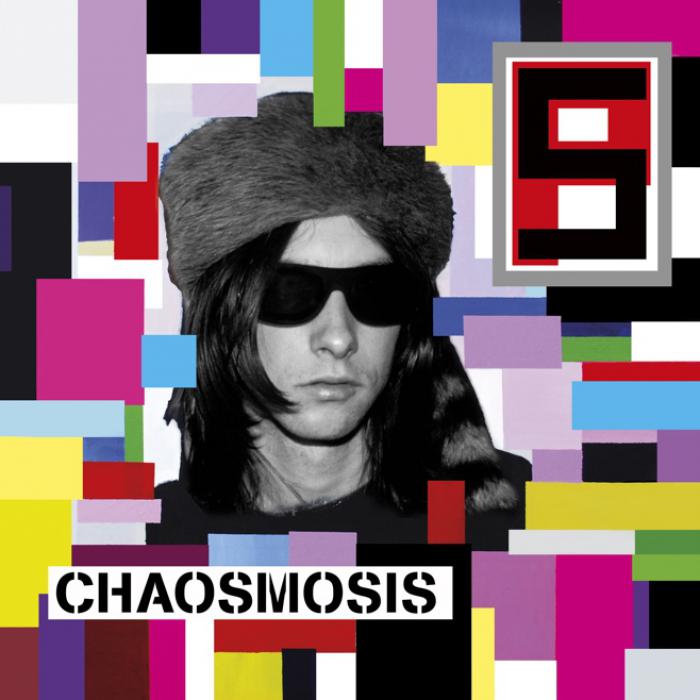
Primal Scream - Chaosmosis, a review.

Primal Scream, Scottish indie/alt rock legends, 36 years young now, have led a varied and bewildering life. Encompassing mid 80’s indie, early 90’s rave scene, challenging electronica, transatlantic rock and most recently straight down the middle pop, they are a band whose new album is always approached with a sense of ‘what’s this gonna be then?’. And that’s exactly how I feel coming face to face with ‘Chaosmosis’, their 11th full length LP. This is Primal Scream’s sobriety album, it’s title referencing French psychotherapy.


Somewhat unexpectedly we’re faced with Madchester in full on Happy Mondays/Soup Dragons mode on opener ‘Trippin’ On Your Love’. Bobby Gillespie is joined by Haim on vocals on a track that genuinely sounds as if it came from 1990. It’s high octane pop and it’s fabulous. Surely the whole album won’t be so specifically retro? Well no, cause immediately we trip 10 years further back in time with the synth pop of ‘(Feeling Like A) Demon Again’. It’s so 80’s it could be La Roux. It’s a cyclical song about a relationship being battered through chemical (as in drugs man) warfare. It may sound sugary to the ears but lyrics like ‘Lost my love, became a ghost, Hurt the ones I love the most’ paint the true horror of the situation. Cheery stuff! ‘I Can Change’ lyrically is the optimistic reply to this, and it grooves on a Roxy pop vibe, with Bobby G even attempting a Bryan Ferry vibrato. So far it’s fairly retro sounding but then even when at their harshest and most inventive Primal Scream have always drawn from the multi coloured tapestry of rocks history.


‘100% or Nothing’ opens with a continuing synth pop vibe but is quickly slashed away by buzzsaw guitars, more Haim backing vocals and more brightside struggling relationship words, ‘The anti-depressants don’t anti-depress’.  And then ‘Private Wars’ chimes in, all modern brit folk, and it becomes clear we’re delving into the most diverse Primal Scream album yet. I really like this track, and even with a lyric like ‘Death in all you taste’ there’s a genuinely more hopeful vibe here. Musically unexpected and a true wonder.


‘Where The Light Gets In’, a Bobby Gillespie and Sky Ferreira (American singer/songwriter, model and actress) duet, returns to bright, synth pinned pop, catchy as hell and again a lyric of contrasting highs and lows. It’s followed by a much more hard-core electronica sound on ‘When The Blackout Meets the Fallout’, a decaying story of crumbled love, a sexless relationship cast adrift in the slums of romance. It’s short, sharp and snappy and in its own way as enticing as anything else here. ‘Carnival of Fools’ unites some of the albums influences in one song, single finger synthpop riff, dancey keys and a killer hook. And this quick-fire album is all of a sudden on the home straight, seemingly almost as soon as it’s begun.


‘Golden Rope’ uses another Scream staple, the Stones riff and groove. And the Happy Mondays are again evoked in the ‘Hallelujahs’ of the chorus, there’s even a sax solo before a heavenly ‘Hallelujah’ choral precedes the final part of the song, a softly sung repeated ‘I know that there is something wrong with me’ which in turn is carried out with a clattering drum beat. And then finally ‘Autumn in Paradise’ is hauled in alongside as it should be on this album, a simple synth riff. It’s not ending on a positive note either, this is as bright an ‘all is lost’ song that you could ever wish to hear. You could even imagine it as a late Abba number without too much effort. ‘I’ve got nothing left to steal, There was something when you came here, there’ll be nothing when you leave’ lyrically tops the album perfectly. There’s oodles of despair and loss, broken love and divorce all wrapped up in as polished a Primal Scream album as there ever could be. It’s good stuff, an easy and uncomfortable listen all at one. That’s the chaos I suppose. A melodic paradox.


8/10

Underworld - 'Barbara Barbara, We Face a Shining Future' a review

Underworld, hailing from Romford (lager lager lager) may always be remembered most for their mega hit from 'Trainspotting', 'Born Slippy (Nuxx)’, but there's a lot more to them than that. This is their seventh album proper (as Underworld MKII), and the first since 2010's 'Barking'. Not that they've been lazy, solo projects (mostly ace), more film work and being musical directors for the London 2012 Olympic spectaculars have all been negotiated on the path towards this fine return. And you know that Karl Hyde from Underworld? Well I had him in the back of my cab once. Well, not the back of my cab, I've never driven one. But he did purchase from my place of work, Richer Sounds in Romford shortly after 'Born Slippy' had ruled the airwaves. Amazingly in a packed music related shop in his home town of Romford I seemed to be the only person who recognized him. This says a lot about Underworld, generically faceless but instantly recognizable once you open your ears.


The albums odd title comes from Rick Smith. 'Barbara Barbara, We Face a Shining Future' is one of the last things his father said before he died. Rick's mother's name is Barbara and she was fearful of the future without her husband. Despite the most famous lyric from their most famous song Underworlds club culture has always had more depth that drink, drugs and partying.

Opening with a heavy drum beat the group are immediately on pace. The synths are a bit more analoguey sounding than the stabbing digital sound of many previous releases. There's a feel of Berlin Bowie too. The track 'I Exhale' is also the albums leadoff single (as much as it can be in this age of non-physical release pre album 'singles'). It's a great undeniably 'This Is Underworld' lead off moment. Sadly, the days when this kind of creativity leads to hit songs and massive public consciousness are long gone, but Underworld fans will know this as a wonderful new dawn without denying the bands past. And this is how the album continues. It's great because it is what it is, without trying to be anything in particular. The band sound as if this is the music they make because this is who they are not because anyone is telling them who to be. For an electronic band there is a wonderful organic sound and feel.

Always immaculately crafted and supremely produced this also a collection that works well as single tracks or a collective whole. Some of Hyde’s intervening work has been with Brian Eno and though Eno is not present here I feel I can hear his presence. If anybody's going to leave a mark on you it’s probably going to be Brian Eno. Fourth track 'Santiago Cuatro' is the first to break character, a soft instrumental built around a meandering oriental base. 'Motorhome' trance’s around a singular lyrical motif for over three minutes before expanding its horizons, and it's a fine thing. As with 'Louisiana' from 'Barking' (an absolute Underworld career highlight, check it out on YouTube if you're unfamiliar) I'm loving the softer Underworld moments as much as the banging ones. And softly a-banging again we go as the album build towards its climax with ‘Ova Nova' and closing track 'Nylon Strung'.


And so after seven tracks (the Japanese as usual get a bonus extra track) Underworlds classy return slides to halt. Maybe it sounds more mature, but then so are the men that made this music. But as ever Underworld sound and remain highly relevant and coolly creative. A very very good album.

9/10.

X-Ray Audio – Recorded music in Soviet Russia on the bone

Simple, Free Image and File Hosting at MediaFire

On Wednesday (9th March) I went along to an event at Rough Trade East off of Brick Lane promoting a book called ‘X-Ray Audio – The Strange Story of Soviet Music on the Bone’, a tome about bootlegged western and banned music in post war Russia, in which many Russian citizens suffered imprisonment because of their love of music and their willingness to make it available in a state that banned much of it. With little to put their music on these guys pressed music onto discarded used X-Ray plates. The recorded quality was not great but it was better than nothing. My attendance was prompted by a performance from Marc Almond, whose performances were cut to X-Rays live on the night (without too much success!). This performance of ‘Friendship’ a song Marc knew of from his Russian musical hero, Vadim Kozim, was recorded to one of Marc’s own X-Rays, presumably of his gruesome injuries following a life threatening motorcycle accident in London in 2004. The recording did not work too well (modern X-Ray  plates do not lend themselves as well to the process as much as the older ones used in Russia half a century ago.) Here though is my trusty iPhone recording of the performance.


The resultant recording was unplayable, Marc’s crowd rousing foot stomping basically not helping the process (which can be seen on the projector screen behind him). Before this, Stephen Coates, the editor of the book and performer in the Real Tuesday Weld, presented his story of how the book came together. This is his presentation at TEDxKrakow


On the X-Ray Audio website there is also a short documentary on the subject. This is it.


The evening was informative, interesting and enjoyable, including Marc’s all too brief, under-rehearsed but enthusiastic performance. The book is a wonderful read. Finally, here is Marc’s BBC World Service radio documentary (from late 2015) on the previously mentioned Vadim Kozin. Marc cut an album of Kozin’s songs, released in 2009, called ‘Orpheus In Exile’. 

David Bowie GIF


https://mir-s3-cdn-cf.behance.net/project_modules/disp/16cdb132965789.56b50e64833ea.gif